~~~~~~~~~~~~~~~~~~~~~~~~~~~~~~~~~~~~~~~~
art lives in the mind.
but there is no mind.
art lives in perception.
but there is no perception.
art lives as patterns.
there are patterns.
but there is no art.
~ ~ ~ ~ ~ ~ ~ ~ ~ ~ ~ ~ ~ ~ ~ ~ ~ ~ ~ ~ ~
~~~~~~~~~~~~~~~~~~~~~~~~~~~~~~~~~~~~~~~~
art lives in the mind.
but there is no mind.
art lives in perception.
but there is no perception.
art lives as patterns.
there are patterns.
but there is no art.
~ ~ ~ ~ ~ ~ ~ ~ ~ ~ ~ ~ ~ ~ ~ ~ ~ ~ ~ ~ ~
–––––––
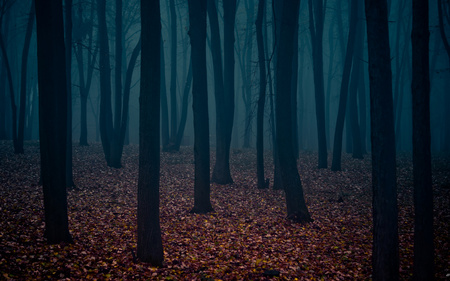
a boy, alone, shadows, crafted by leaves, filtered sunlight, these empty days, with no obligations, wandering wonders, of the world, this moment, heart pounding, he runs, chasing the hunted, hunted by a hunter, swift, silent, silence, look right, look left, up, swerves, he whirls, the unknown still unknown, dusk, rods and cones, mesopic optics confused, blue, green, dark blood, drips slowly, drop, surrounded, he flees, raised among the markets, he retreats, returns to them, passing tree upon tree, dodge, duck, jump, hide, sprint, back back back, to the artificial, light, light of man, man’s lit streets, beasts cannot roam, the ones created by nature, disallowed, too afraid, unable to survive, this maze of brick, steel, dung, motive means, rigid paths, paved more, less, to drive, anonymous exchange, eye of God, attempts, a reminder, that indeed we do trust, that, which isn’t, what, a boy, should know.
–––––––
Who’s Free and Who Isn’t (this is about artists) aka who should we pay aka The Free and Anti Free
An N+1 article grapples with the basic question, “should an artist get paid?” https://nplusonemag.com/issue-20/the-intellectual-situation/the-free-and-the-antifree/ It’s a decent question – that is, we ought to ask it and keep asking it. This article and so many like it definitely don’t answer it. The article isn’t poor quality. It’s thought provoking in that way where you want to chase down a lot of things. I don’t want to pick apart the article right now as it gets into class warfare, lots of history, media critique and more. I want to attack the question head on without the backdrop of all this other stuff – which I think is mostly just baggage.
The most important point of all is sort of an anti-point in life and existence. That is, none of us, nothing (no thing), deserves anything. The title of the article introduces the concept of SHOULD which is really just a form of “deserves.” Human language will never do this point justice but there isn’t any universal SHOULD. There are proximal “SHOULDS.” In some cultures, in some relationships, in some situations X SHOULD HAPPEN.
So no, artists shouldn’t get paid.
In this proximal culture, this western world of award shows and museums and ad agencies and media companies, should artists get paid? maybe. If they want to get paid they figure out how. Should they be paid a priori because they are doing art? maybe.
Why the waffle?
Really this question is bigger than art and artists. Does anyone deserve to get paid? should ___________ get paid? No. No, no category of people, persons, trades, classes SHOULD get paid. Do they? yes. Yes, some people get paid. Some categories of people with categories of skills get paid.
This distinction matters because there are FAR MORE starving manual laborers than starving artists. There are FAR MORE starving students than artists. There are a lot of starving people on the planet. There are lots of species of animals in very bad shape. The subclass of artists that are humans that are part of species on the earth is hardly unique.
what is art? that’s a relevant question at this point. It doesn’t matter. what is science? what is math? what is teaching? what is philanthropy? what is a job? what is work? Should WE Get Paid?
what do you do? Why do you think you should get paid? If you are a teacher you most likely have decided that you’re doing a good for society. If you are a social worker, same. If you are a business person you probably think you are “adding value” to the company or marketplace. Most likely you think you should get paid because those around you and those before you who did vaguely similar things think you should get paid and those people often “hire” those similar to them.
and then there’s art (and its cousins…) Art is the stuff that changes perceptions. Art is the concepts and ideas and forms and tools that don’t make sense. Pay only comes from a marketplace. Art is anti-market. It has an anti-market if it has anything at all.
So n+1 and those that worry about these sorts of things you can stop wondering if someone will pay or if capitalism or whatever category of being we’re talking about will assign commodity-based currency quantification to something that seeks, at its core, to never be defined.
Art and artists should forever seek ill definition, that’s the fucking point. If there is a point at all.
–––––––
At the escape the pistons fire incorrectly.
She frowns at the sound of hushed murmurs.
Bound and silenced, his captors forget.
In an instant, bang, existence.
Swallow-filled woods hide the shadowy fleet of marching barbarions.
Billowing stacks fulfill the dreams of green-eyed titans.
Misfired, misdeed, mistake but still someone is dead in Ferguson.
“You lie!” from the commons it comes changing discourse discordingly forever.
“Hello [long pause] tell me your location,” the sleepy 911 operator sighs.
Dosed off, door unlocked, debts unpaid he sleeps perhaps too well.
The far off chirp and the slight drip of sunsoaked cicles warns us that he will arise soon.
Logic gates flip bits determined to ruin fortunes.
She blushes at the his left left foot.
A scream reaches out signaling another miracle.
–––––––
I love Robin Williams.
Robin Williams is a hero of mine. But that’s not really a deep enough concept to express his role in my life. I have absolutely shaped my approach to life around what I perceived of him as a hero. I never met him. I never received fan mail back from him or did a stand up routine next to him. I don’t have any remarkable story about him – except that I stayed up late, rented, borrowed my way into every piece of work he put out. From Mork and Mindy to the Comic Relief stuff to all of his movies to every late night appearance… I took in all of it as some source-book of how to interact, how to think, how to absorb the world so fully you can be in all of those situations and BE REMARKABLE.
As a high school senior I thought deeply about the idea of Julliard because of him. I imagined a future in which I could go out to the world and say things he said… not because I rehearsed it but because I was speaking honestly in my synthesis of everything I was taking in. I wanted to be that good only better… even faster on my feet. Even quicker with my wit. Even deeper with my knowledge. Anywhere, in any circle, at any moment.
And make no mistake, I’m not delusional about Performance vs. Real Life. I read anything I could of his non-performance experiences – from his activism and social engagement to his personal struggles to his ideas about comedy to his appreciation of J. Winters. Robins Williams life, in all its facets, speaks profoundly to me.
For most of my life the person I’ve been mostly compared to in my approach to everything, even from my own mouth, is Robin Williams. (and I not only don’t hate it, I love it. I want to be that.) I’m drawn to this engagement with the world:
KNOW EVERYTHING YOU POSSIBLE CAN
LISTEN TO EVERYTHING (EVERYTHING!) and EVERYONE (EVERYONE!) AROUND YOU
SYNTHESIZE VERY QUICKLY
TRY ANY IDEA
10000000 jokes (ideas) is bound to deliver 1 GOOD ONE, SO KEEP GOING
ENGAGE EVERYONE SINCERELY and SERIOUSLY
WALK A BILLION MILES IN EVERYONE ELSES SHOES
SWEAT
Yes, Dead Poets Society is one of my top 5 movies. Good Morning Vietnam is also in the top 5. Good Will Hunting is such an important movie to me….. …. …. All these things are quite obvious. Robin Williams dealt with and engaged and seriously considered the entirety of the human experience. For me he is the ultimate synthesis of this absurd and beautiful world.
The vortex that is postmortem analysis will never change the strange loop that lives on through me and others. Posit what we want about mental illness and depression and comedy and hollywood or whatever else we will try to make it all tidy, it doesn’t matter. Robins Williams is a buddha. He’s one of those rare convergences of vitality that infuses many other souls with purpose. I love you, Robin. Thanks for helping make me, me.
–––––––
Here’s a short presentation about programming, my philosophical view of it, that is.
–––––––

It’s nearly, if not totally, impossible to remove our deeply held biases, values and contextual history from our raw, sensory perceptions of the world. The difficulty to sense more objectively is what perpetuates so many non-truths about the world. Nearly everything we sense and think is distorted by the biological patterns shaped within us by the world and our interaction within the world. It is within this frame of reference I seek to put down, in an obviously flawed ways, what I think to be at least less non-truth than other theories and thoughts floating about out there.
Our most basic means of communication, the words, sounds, gestures and pictures, we use are so filled with bias it’s impossible to commit to their use in an objective way. The best hope I have is to present as many variations across mediums so that what emerges from these communications is perhaps, if not objective, at least more fully representative of various perspectives that at least the trap of obvious one-sided subjectivity is avoided.
And with that warning, let us proceed.
A first exercise is of definitions and clarifying of terms.
Everything is information. From the most basic particles of existence to governments to rocket ships to the abstractions of mathematics – everything is information. Information looped and entangeled within other information. Information trapped within patterns of information by other patterns of information. Particles trapped into behaviors dictated by the laws of physics. Proteins and chemicals replicating into biological entities by the encodings of genetic instruction. Objects of pure quantity expressed in combinations dictated by rules of provable logical inference. Symbols imbued with meaning combined to form words and sentences and stories that stick in the brains of people and come out of their mouths to be reinterpreted over the eons. Faintly remembered events strung together by stories to form history and imagined events of some time that has not come to pass forming a future hope.
More fundamentally… space and time and causality and logic and being itself. All are matters of information. The casual ordering of events in relation to what is different based on the difference of another entity forming the conception of time and space. The coherence within a frame of reference of words strung together with symbols for equal, not equal, for all, and the such coalescing into logic. What is and what isn’t in reference to what’s logically or causally sensible to us becomes the notion of being.
But this is not quite enough.
Recently various categories of research, science and/or philosophic discussion have added ’emergence’ and ‘complexity’ to the pantheon of fundamental concepts from which we can chart our maps of existence and meaning. The unseen in the parts that only shows itself in the collective – the multitude – the interactive, this notion of emergence.
All in – meaning. Meaning is a vague notion of symbolics and representation within the ontological dimensions of space, time, cause, logic, emergence and being. Meaning is proximal, local phenomenon of pattern. In totality, all things considered, that is all of infinity, there is no meaning – there is no pattern. That is, all patterns at play is pure entropy and no meaning is possible on a universal, infinite scale. (As if we can even imagine such a concept). On a local, limited frame of reference meaning emerges from patterns (people, computers, plants, etc) pattern matching (sensing, perceiving, transforming, encoding, processing).
I propose a phrase: existential equivalence. Every investigative thought, every scientific gesture, every act of art, every attempt to send a message, every ritual, every interaction at all with the world at any level is all of similar thing: the encoding and decoding of information within information. This is not a reduction or a reductionist exercise. Quite the contrary. The varieties of symbolic expression in all of existence is REAL, it is a thing. That existence is expressible in an infinite variety is necessary. and it can only be known, even in a limited way, by actual variety of expression. If anything is to exist, it must exist in infinite variety and multiplicity. Everything that exists has existential equivalence. The entirity of existence is relational.
For instance if there is such a concept and sensation of color it must have expression in physical and artistic and literary terms. It exists at all levels implicated there. If a wavelength of light is able to generate a visual and neuronal concept we called red, then red isn’t just the wavelength, nor the wave of light, nor the eye, nor the brain, nor the word… it is all of those things and all of the things we do not yet think or talk or gesture about.
Or consider a computer program. Its existence is a string of words and phrases transcoded into 1s and 0s and into physical logical gates transmitting electrons and back around and on itself into monitor LEDs into human eyes and brains into motor movements of mouse and keyboard and so on. A computer program is the interaction of all the information.
But surely there are such simple things that do not have a universal relationship – an existential equivalence? what is the simplest thing we can think or speak of? a boson? the number 1? a dot? just an abstract 1? It is impossible to wipe the complexity of existence from even these pure abstractions. We only conceive of their simplicity in relation to other concepts we find complex. Their simplicity must be weighed against everything that isn’t simple.
And so here we have a collosal contradiction. Patterns are a local phenomenon. They aren’t the entirety. And yet I’ve suggested that patterns are existence – all that exists. Unraveling this I am directly saying that patterns interpreting/transcoding/sensing patterns is what exists – creates th world – at all levels. Pure relation, which is only possible at a local level, is existence. Particles only exist in relation to other particles – a gradient. Humans to other humans, to animals, to the planet, to particles. Planets to other massive bodies… and so on, and on, up and down, left to right, back and forward, in and out….
herein lies a beautiful thing – mathematics and computation are a wonderfully efficient symbolic translation methods. This is why computers and mathematics always creep their way into our efforts to make things and make sense of the world. It is why our brains are so damn useful. complex abstract pattern recognizing patterns – these networks of neurons. It is why DNA is so proficient at replication. a “simple”, resilient substrate carrying everything necessary to generate and regenerate these networks of neurons that can then make synthetic networks of pure relation. Whether particles or quantum or digital or biological or chemical there is pure relation, pure patterns among patterns – there is math. It matters not and is completely the point that math and computation can be done in any substrate – between proteins, with pen and paper, on a calculator, in a quantum computer.
AND
why is that? WHY?
In a feat of complete and utter stupid philosophy and unlogic… because it cannot be any other way. Positing a god doesn’t escape this. Positing a multi-verse doesn’t escape this. If any of those things are to exist, they must exist still in relation – they are relation! It’s borderline mystical. Of course it is!
And why does any of this matter? is this just another sound of one hand clapping? a tree falls in a forest does it make a sound? Yes. yes indeed. Those, while used to dismiss the question from the outset actually do call attention to the entirety of the situation. What we conceive of as existence and existing is usually reductively done in by our discrete categorization and our failure to continuously review and revise our categories. The practical implications of this adherence to categories (zoology, isms, religion, gender, nations, science disciplines, etc) is what stunts our path towards knowledge and keeps us in fear.
If we don’t lean into the idea that everything has an existential equivalence we are simply deciding to be ignorant. And in that ignorance we trend towards non-existence. In every day terms if we see the human population only by the color of skin we diminish human existence. If we say and take for truth all of the -isms, reductions, and arbitrary definitions we snuff out relation. If we make any assumptions at all and refuse to question those assumptions, even what we think are so obvious and so simple, we move closer to entropy. If we want to exist at all, we must be mystical and fanatical about sensing relation, resensing it, re-interpreting it. This is not a moral argument. Existence is no more moral than non-existence – except as a local conception.
It really does come down to this (and this is very Camus-like):
If you care at all to exist as you, you must question/express/relate to everything as much as you can before your pattern is fully transcoded into something not you. (we are just food for worms…)
So yes, ask yourself and answer it in infinite variety over and over “if a tree falls in a forest does it make a sound?” This is life – it is your existential equivalence to everything else. You relate, therefore, you are. I relate, therefore I am. X is, therefore X relates.
Today i was challenged to write like i talk about the things that i wax academic about. so here’s an attempt to do that as much as i or anyone can do to write as i talk as i want to be heard. i still maintain that it’s not really a useful thing to go making a specific attempt to speak to an assumed audience in an assumed style of language (or whatever we mean by speaking to an audience). the advice to do this comes in these statements:
dumb it down
fit the audience
read your audience
speak like me
laymans terms
talk to regular people
don’t be exclusive
you’re elitist
and many other variations.
What i really think?
the truth of things are what they are. that is… you speak, write, paint, pant, act, dance, work, do nothing, exactly how the situation demands. to try to represent something as something it isn’t is just stupid and delusional.
don’t try to make a really fancy physics theory into a childish song. don’t make jazz into some crappy magazine article about music. things exist as they are. let the perceiver, ok, sorry, the AUDIENCE, come to it as they will, when they are ready.
not everything… in fact, most things… aren’t about selling a ticket or a download or monetizing an eyeball.
no bullshit.
–––––––
Yesterday someone told me that science was contingent and logic necessary.
I struck the stone – at first lightly
Then I dug in and drew blood.
Fractured assumptions flared their flimsy premise
Crumbling before less than mighty blows
This someone warned me if you crack too hard
The stone carries impact damage
Scaring the surface
Forcing you to sand and polish
That is if what you care about is something smooth and approachable.
Will this stone yield to me?
Or am I yielding to it?
My logic battering it tink after tink
Forces my theory that no matter what I do
This stone will be what it is
And it is up to me, flawed and frayed, to ask
It questions
The response is Wittgensteinien. Silent and yet understood
A brooding proposition of certain doubt
That nothing yields everything.
I got into a discussion this week with a fellow technology focused person about whether CREATION is a thing. That is, do we actually create anything. My position is that there is no creative act. No source of creativity. There is search and selection by consequences. Everything in existence, and particular our lives from our gene code to our behavior to the software we write is a search through the space of possibilities and a relentless selection by consequences that maintains possibilities that survive more consequences. The creative act is a notion that’s perhaps useful to communicate unfamiliar or low frequency of occurrence possibilities but it’s not a fundamental thing into itself.
Why I care about this argument? Assuming CREATION as a thing leads to all sorts of false notions that anyone or thing is responsible or should get credit for what happens in the universe. And this practically played out is the source of most of our inequality and makes sure we don’t actually explore possibilities without bias. Exalting the “creative” and the “creators” blinds us to the infinitude of possibilities, most lurking right under our very confused senses and conditioned context.
–––––––
 Social Mode