Social Mode

,

  • The ritual:

    Using speech-to-text software trained to my voice, I get to process the world’s media (including environmental sounds) in a way that usurps the originator’s intent and content. The software is as imperfect as my notes are and misrepresents sentiments as well as police sirens as text, translating the mumblings as dialogue.  What’s more, in its translations it adds (hummms, ahs, ands & LOL) to make another unique piece of content for others to scan.  Think of the process as an interactive shoreline based on initial conditions and interrupting floods of events.  What you end up with is an electronic oracle that spews out unclaimed media prophets.  Sometimes you get hooch and sometimes you get scotch!

    The rules:

    The raw text file is generated from an environmental source and is recreated into a stream of content that needs to be clipped and cut like a shrub…frequently not taking the form it was supposed to have when it was recorded.  All ordered text remain hallowed but words were cut, added, indented and otherwise dressed for the occasion as you remembered.  Only afterthoughts are added robustly dotted with parenthesis and punctuation in the attempt to capture the nuance that is lost in the moments.  When complete, it is not recognizable any more than that uncle that moved to Wisconsin after his parole.

    The results:

    Our reliance on technology to interpret and host the world’s events is colliding with our ability to absorb, analyze, reflect and proclaim.  Good.  Are these gizmos mutating our perceptions or making us own them?  Beats me… Maybe now we can witness that what was, wasn’t as we thought.  That which never happened, could’ve.   Somehow I think that it is like the NSA/CSS threat; there is only the hint of something important to be gleaned from the abyss of bytes.  

    Next up, self-talk recorders…it hurts my amygdala just considering it.

    Walking Talking Technology

    –––––––

    Jun 19
  • I have just received for the 12th time this week a virus wannabe email that purports to say that the writer has grave concerns for this country….etc.

    In response to the person of known evangelical everything [non-religious meaning] to pass on emails, I gave the following challenge: 

    Nice to see your name in my inbox.


    This has an interesting kind of evangelistic sway to it.  Softer than most but a humble chain email… in a way that reeks of “don’t blame me for the last 71/2 years!”


    So, what do you think ______?  What are your thoughts on these statements?   How do you assess that a person who was a prisoner of war contributes to that person’s international expertise?


    I think that writing these pieces is the best thing in the world for those that write them.  Very cathartic, don’t you agree?! 


    They are the ones who make the effort, take a position, and expose themselves to critique.  Ultimately, they are the one’s who know what they believe, what they value and so on.


    In comparison, what are the people doing that pass these on?  Kind of like in scene in “When Harry Met Sally” where the on-looker in the restaurant says drolly, “I’ll have whatever she’s having…”


    I’ll make a deal with you…  If you write one, I’ll write one.  I’ll pass on mine no matter what and you can decide if you want to pass on yours.


    Now THAT is involvement rather than being part of the ‘silent majority’!   Is it a deal?

    I’ll make the same deal with anyone who cares to send less than one page on how they feel about this country and this election. 


    Looking for takers, not fakers. 


    Come on… put it out there… you know you want to!

    –––––––

    Jun 18
  • This is a nice post today on visualizing the participation of users in popular open source projects.

    Good lead in for the study I’m going to do on the upcoming N-Brain competition.

    Code Swarm

    –––––––

    Jun 16
  •  

    Boy, has that a lot of meanings….

    But consider this version of ‘cosmos’…


    According to Lawrence Krauss of NEWScientist magazine, David Brook wrote in The New York Times in May that


    “…while we moderns see space as a black, cold, mostly empty vastness, with planets and stars propelled by gravitational and other forces, Europeans in the Middle Ages saw a more intimate and magical place. The heavens, to them, were a ceiling of moving spheres, rippling with signs and symbols, and moved by the love of God… The modern view disenchants the universe and tends to make it ‘all fact and no meaning’.” 


    YIKES!  This is a world-view a 5 year-old would not embrace.


    Brooks’s article reflects a popular view of science and technology shared the world over.  For too many and for too long, the complexity and majesty of the inner workings of the universe, a cell phone  or a blender – robs some of the ghostliness and the mercurial wonder fulfilled by myth, superstition and religion.  

    Only the hopelessly lost and the cynical would suggest that medieval banter, hallucinations, and fantasy are of greater value to man today and our future than the actual workings of the universe.

    This romanticized fantasy and yearning for the “good ‘ol days” is more frequent and pervasive in times of great change and upheaval when all the absolutes are evaporating in a short course of accelerated science. 

    On the opposite end, the spiritual and mythical universe is anchored among our fundamentalist religious myths, along with virgin births, booga-booga incantations and other intellectually lazy creations of simple minds where answers must be keep equally simple rather than accurate or non-existent.  Brooks’s column referenced Barack Obama’s much-maligned statement that – some people turn to religion and guns for refuge from the inequities that abound.   From the response, Obama must have struck a note that many people would rather not hear.

    Science is not necessarily a comfortable place to hang out.  It certainly is not for everyone.  For those that do hang out in the library, lab, or field explorations, it is laughable to have naysayers poo-poo science while they are clogging their brain arteries with cholesterol, The Simpson’s and Brittany Spears.  When it comes to an emergency cure for clogged arteries, some neurosurgeon with 25 years of science philosophy, practice, and imagination will be paged to save his life.  There is no current cure for The Simpson’s and Brittany Spears brain clogged arteries.

    A lot has happened since the discovery of the new world.  Sailors from those ancient times mentioned above learned that the constellations in the sky were a ‘tool’ to navigate and an aid to their survival.  Many could only wonder if the same star constellations existed in the other hemispheres around the globe.  The light from the stars of other galaxies takes billions of years to reach us.  Those sailors saw light that is ceased to glow since then.  It seems that surely expands the imagination more than incense, fables and war-lording that’s provoked by religions feuding over who are the ‘delivered’ people.

    The skies are not inhabited by mythical beasts, nymphs or fairies.  But, yes, their may be life out there or a version of it that some of us can agree on. 

    Worldwide superstition is based on fear and lack of understanding of the relationships between entities in the universe.   Until we learn to separate mythical thinking from a knowledge base developed empirically, we’ll continue to invent alternative realities to justify whatever is the current superstition.  Thus, for now it is important that we get an accelerated perspective on what is imaginary and what is real.

    Why does it matter if people cling to myths for solace from the confusion?  

    It matters because real-world problems such as hate, hunger, disease, genocide, and climate change can only be solved by real-world thinking. That will require that people get uncomfortable.  Our “raison d’être” is survival. Nature doesn’t exist to serve humanity. It is ruthless.  It knows nothing about accounting or retirement or children in religious sects.  While it is hard today to abandon silliness, it will become even harder when consequences of superstition are racking every thing on earth – especially when our own survival is at stake. 

    Recounting myths and calling it ‘tradition’ does the world a disservice.  Myths put humans at the center of everything.  That is a big error.  Be suspicious of those that promote human based logic. By acquiescing to some ‘harmless’ superstitious practices the weary and confused are distracted from selections about the future that even doom their wishful thinking that is the staple of supernatural thought.  

    None of this is easy so lets get started right away.

    ~~~~~~

    It is the cosmos, not “Cosmo”

    –––––––

    Jun 13
  • TIm RussertThis sucks.  Catch the news here.

    Tim Russert was pretty much a badass.  I’m actually fairly sad about this.  I rarely miss Meet the Press (it’s a behavior schedule deeply set in).  90% of my election coverage comes via Russert.  Man, what a schedule change.

    Beyond that though, this does change the election.  Can’t predict how, but Meet the Press and Russert did influence thinking and discourse.  Russert was a consequence or an enforcer of consequences – loose talk, bad campaigning, covert operations – he brought it out.  Also, I have a feeling he improved the reporting at NBC quite a bit by just being a thorough and deep thinker (and good writer).

    Man, black swan, of some sort.

    Hmmmm…

    Tim Russert Dies of Heart Attack

    –––––––

    Jun 13
  • Take a deep breath as you’re going to cry or laugh at this next post.

    “Ben Jones figures he drank 43,000 beers, 2,000 jugs of whiskey, wine, gin and vodka, and smoked pounds of pot in the 20 years he was out of control.

    […]

    “”A year later,” he said, “I walked into an audition and was cast in what was to become one of the greatest television shows in the history of entertainment.” That was “The Dukes of Hazzard.” Jones would play the wisecracking mechanic Cooter on the popular TV series from 1979 to 1985.”

    Read the rest here.

    If this doesn’t tell you about behavior and how our culture of character flaws and cause and effect is way inaccurate as a description of how the world works, I don’t know what will.

    In light of my last post on health care and consequences, can you correlate a value system in health care with the one above –  guy drinks 7 beers + 2-3 shots a day gets thrown in jail bloodied a bunch ends up in Hollywood then in politics.  (yes, he gets cleaned up… we know)

    If he ended up killing a guy instead of on “the greatest show in entertainment history” we’d talk about him as a flawed alcoholic destined for death or failure.  Instead, the consequences of his behavior end up differently and we report his fate as a story about “getting back up.”  And now we’ll talk of blessings and spiritual redemption. {note, that I couldn’t find in any of his writing that he, himself, attributes any rewards or punishments to his own credit.]

    My point isn’t that it’s good or bad or anything.  My point is that you cannot form a logically consistent explanation of a lifetime of behavior based on our current ways of talking about cause and effect.  You also cannot take full credit or blame for what you do or don’t do in life.  Really, environment and selection by consequences shape you completely.

    There’s certainly more to his story and his life, further showing just how damn complicated behavior can be.


    Now the laughing part comes when you consider the statement that Dukes of Hazzard is one of the greatest shows in entertainment history.  Ponder that.

    Dukes of Hazzard Value System

    –––––––

    Jun 12
  • Here’s a speech given by my mother.  Aside from any political values, I think it exposes an interesting language (concept) problem we have in our culture – the idea of inherent character flaws.  I don’t always agree with my mom’s language or her conclusions, but I do agree that attacking our many difficulties in society by labeling groups by some absolute characteristics gets us no where.  It leads no where because there’s no such thing as a character flaw.  We are our behavior.  We behavior based on our values.  Values are established via selection by consequences.  

    So when my mom responds to the “What Do We Do With These People?” with the answer that “these” is you and me and everyone else, she’s talking the truth.  

    How to improve health care? Big discussion and we certainly should start by getting rid of language and labels that take us further from improving healthy behavior, setting up healthy environments, and talking about the value systems that keep the status quo in place, for the healthy, sick, rich, poor… all of us.


    Susan Neibacher Address, delivered at the National Health Care for the Homeless Conference

    Phoenix, Arizona

    Thursday, June 12, 2008

    By Donna Smith


    The Experience of Exclusion: What Do We Do With People Like You?


         Good morning.  I can scarcely believe I have been asked to deliver this address to all of you, and I am so honored to be doing so.  Thank you for including me in this experience and for helping bring me back from the depths of despair and exclusion.


         For those of you who have seen Michael Moore’s movie, SiCKO, you know that my husband and I lost our home in South Dakota after suffering through years of healthcare related financial trauma and finding no way to hang on.  We are filmed moving into our daughter’s small storage room or computer room or spare office or whatever you’d like to term it.  And you see our youngest son confronting us about our situation.  He asks us: ‘What Do We Do With People Like You?’


         ‘What Do We Do With People Like You?’ 


        The words seered my heart and my soul then and they still do now as I recall the fight to maintain what little dignity we had left at that point. You see the moments you see on the screen came only after many years of fighting and falling and fighting and crawling our way back again.  Moving in with our daughter wasn’t our only homeless moment over the past 20 years of healthcare struggle, we had lived in a motel for a while after one of my husband’s surgeries, in a double-wide trailer house that we actually fought to keep as our last vestige of home owning freedom, and when we finally gave up the home you see in SiCKO, it was the deepest and darkest instant of that struggle when I heard the baby boy I brought into this world, the young man who I protected and loved and honored with my life’s work ask me, ‘What do we do with people like you?’


         My own son excluded me from the people like him.  Successful people.  People with good jobs and good benefits. Healthy people.  People with enough money to pay the rent, the utilities, the insurance premiums and all the rest of the things people like me could not.  He believed that if I had just tried harder or worked smarter or reached deeper, I could have patterned for myself a different outcome. Being homeless was, in fact and in his mind, my fault.  If only I had made other choices.


        Yet, I knew somewhere in my heart he was simply expressing what we have created in our society.  A attitude of exclusivity in which one group feels more worthy than another and in which those of us who cannot afford a home or healthcare or brand-name toothpaste are placed in a category outside of the mainstream. I grieved not for the loss of my home but for the cruelty even in my own family and felt deeply that as a mother I had not taught him that sometimes no matter how hard you try or how hard you work or how hard you believe, sometimes you cannot alone lift yourself from the depths.


         Over the years prior to that moment, it is true we struggled up and down and in every way.  Most of the time we did so quite privately, not admitting to anyone how bad things had become.  Sometimes we tried borrowing money in ways that were not the wisest or in the only ways we could, and our situation simply got worse.  We followed the pattern many, many families and individuals do in our nation — fighting to make it work somehow.  But there we were.  Standing in line at the food pantry every month, asking churches to help pay utility bills, selling anything we could to stay afloat — Did you know you can actually cook — well sort of — Ramen noodles in lukewarm motel room tap water?  I’ll bet some of you do know that.  And it’s sometimes 10 cents a package. That’s the way things were for a while.


        After finally accepting the offer to move in with our daughter, we began the emotional and mental unraveling you saw on the screen in SiCKO.  We begged people to know that we were trying hard to pull things out.  It was so painful to have family and friends change their tone of voice when we’d call — they were terrified we were calling to ask for money.  And sometimes we were.  And I took an office job I hated just to get the benefits and earn enough for a security deposit, and first and last month’s rent to get an apartment again.  And we moved into the place with a broken futon, some $5 lawn chairs from the evil empire — WalMart — and our clothes and the dog.


        It seemed that everything we had worked to do in our lives was now distilled down to the measure of our financial failure and loss of our health.  For me, having cancer was not a time when my diagnosis afforded me great support and love.  I worried about losing time from work and spending money and losing benefits.  Now in recent news reports, we all heard about this: we all want Sen. Ted Kennedy to win his battle with cancer, but I’ll guarantee you his first thought was not about finances.  And he never wished to die quickly rather than bankrupt his spouse — like I did on that lonely August day when I heard the words, ‘You have cancer.’ 


         So, how do we survive the exclusion and the pain and the anger and the withdrawal it takes to simply survive being viewed as a person with so little value?   It seems to me that how I survived was a miracle.  I am always acutely aware that more than 25,000 people who told their stories of health care horror to Michael Moore are not in the film… And those 24,988 people and families did not get to know the dignity that came along with simply having someone care enough to let us speak our truth.   


        But over the next several months after SiCKO was released, I have come to see another side of what it means to be ‘people like me.’   Some of you know I spent two months this fall and early winter traveling on a 1980 school bus telling the healthcare reform message in 12 states and 17 Congressional districts.  From Gary to Nashville — where I first met John — to Huntsville and down into New Orleans, from Florida and back up through the Carolina’s and on into Pittsburgh.  I spent Thanksgiving in Birmingham, Alabama where other homeless people embraced me in ways I never knew I could be embraced. They thanked me and wished me a happy Thanksgiving. 


    They held my hand as they told me their health care stories and we cried together about the pain we are all suffering.  I was finally with ‘people like me.’  And I met veterans of our armed services who are most assuredly deserving of homes and healthcare, food and our deepest thanks and respect.


         So, my young son asked, ‘What do we do with people like you?’ 


         Well, after visiting 28 states and the District of Columbia this year speaking about healthcare reform, I can finally answer him. 


    We give people like me healthcare — always and freely.


    We give people like me warm shelter and food.


    We give people like me credit for having as brain and will power that did not break but enduring a system that did.


    We give people like me the dignity to choose what they will do next in life with the tools we can together provide and that are given with joy.


    We give people like me a voice — the way Michael Moore did for me and U.S. Rep. John Conyers, author of the National Health Insurance Act, HR676, did for me when he had me testify before a sub-committee in Congress, or the way the California Nurses Association and National Nurses Organizing Committee wrapped us in decency and welcomed us into their fight for single payer healthcare for all —  and the way a civilized people do for one another.


    We embrace people like me in the fight for a better nation — people like me are the people who built this nation and we are the people who will rebuild it into a more just and peaceful and compassionate society once again.


    We will include people like me and we will call one another to task when any one of us is excluded — people like me are  people like you.


    Thank you so much.

    Universal Healthcare – Universal Language

    –––––––

    Jun 12
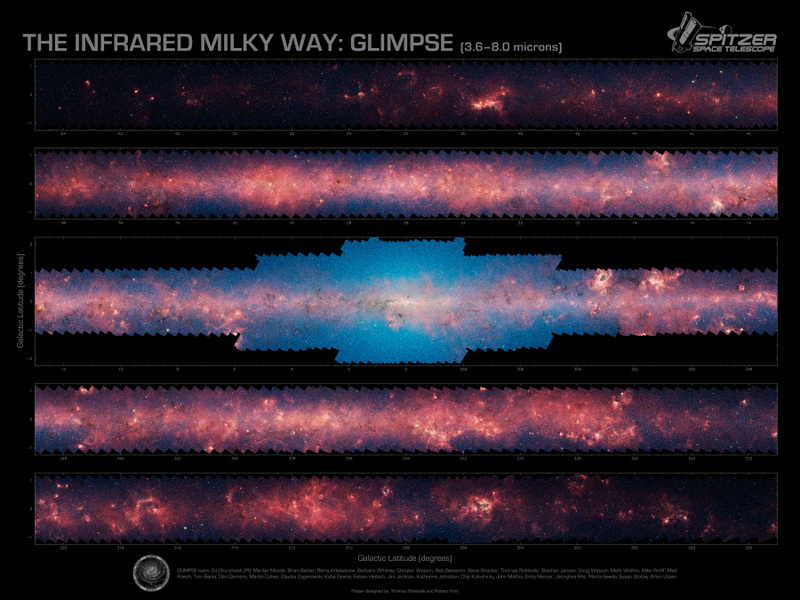
  • The image below is a newly released panoramic (biggest ever view) of the Milky Way.  (find more here)

    We’re on a planet, in a city, so small and hidden in this picture.  Don’t bother squinting, you can’t see us :).  

    Question: Does this indicate the improbability or inevitability of our existence to you? Why? 

    Question 2: Does it suggest a purpose to you? Why?


    (Click to enlarge)

    The Milky Way Is Huge – Where Do You Stand?

    –––––––

    Jun 5
  • The study of animal and human behavior is fraught with quantitative potholes.  Months ago I explored these with a fellow researcher and was put back into place simply by my lack of knowledge.  However, after months of study where I understand a smidge more than I knew thing (not much more because I learned how much more I don’t know!), I’m confident in my identified modeling potholes.

    In the majority of behavioral experiments and studies researchers plot and analyze stimuli, responses, response rates and some physiological/biological events.  The stimuli can be classified in various ways and same with the responses and biological events.  Common terms used are consequences, reinforcers, punishers, fixed action patterns, action potential, conditioned responses, s-r, s-s, discriminant stimulus… to name a few.

    And now the rub.

    What exactly are these?  Peeling back the layers, what’s underneath these?  what are their discrete quantifiable parts?

    Let me explain… when we measure a response, we consider the whole of that “response.”  Consider the classic examples of pigeon pecking.  We measure the “pecking behavior” rates.  It can be a quick peck, a succession of pecks, hard peck, soft peck and so on.  In most studies what researches are looking for is the relationship (not necessarily the quantitative/magnitude relationship) between the pecking behavior and various stimuli or reinforcers/punishers.  Typically a simple graph of time vs. rate of response is plotted to show strengthening or reduction in the rate of response.

    All of this is very good for verifying that there is a relationship between variables.  However, it has not been helpful at all for defining a reliable, falsifiable, quantitate law like F=MA or the wave equation or anything.  It these approach never can deliver that!  Why?  because what you are studying is quantitatively subjective.  You have no way to measure pecking behavior versus drinking behavior versus fighting and so on.  You can never arrive at a generalized rule that says if I use a VI 6 schedule of reinforcement I always generate a response rate curve of 1/t^2 or something similar ( rate of response drops off as inverse square of the time). 

    This makes it impossible to apply one researchers finding to another situation other than in relational terms like “we know variable interval schedules tend to increase the time to behavior extinction”.  I can’t say by how much, how long.

    Up until recently this was ok because for the last 100 years we didn’t even know, understand and appreciate the fundamentals of how we learn and adapt behaviorally.

    And make no mistake this same problem exists in producing quantitative models of natural selection.  What exactly are you measuring with variation in a species? How do you assign some magnitude of variation?  How do you compare to variations and their impact?  This green frog is X different from this blue frog…. X is????

    I’m not sure it’s even possible logically much less computationally to get at models of natural selection and human behavior.  These are more “organizing principle” type theories/laws.  This is where my brain goes haywire.

    Genes mutate.  We can see the consequences play out.  We can measure environmental variables, population densities, genetic expression and pretty much every aspect involved in playing out natural selection.  Yes, we can’t really look at a species and individuals in a species and apply an equation to predict it’s proliferation or extinction.

    And so it is with behavior.  I can measure responses, catalogue stimuli, map neural networks, and plot the consequences.  I cannot look at an organism and predict with numerical precision how it will behavior – when, where, how much.

    I can do this relatively.  I can make probability statements but not even those end up like the nice wave equation in quantum mechanics.  The probability statements are not reliable from organism to organism.

    Part of this trouble comes from the huge variation between organisms (biological, environmental).  We can control much more strongly the stimuli (then again, the stimuli is relative to the observer, oy.)

    Some ask why care about this at all?  So we can’t predict natural selection or human behavior, what difference does that make.  Besides that’s one of those intractable problems, Russ.  You are better off just observing how it plays out than coming up with computational models that will never end.  (computational irreducibility in some sense).  I agree on a macro level.  We’ll never be able to simulate / predict human behavior faster/more efficiently than letting it play out.  Any thing we do to get that efficiency will cost us in detail or clarity (which in behavior and natural selection can produce critical modeling errors down the road!).  

    We can’t really produce absolute models in other disciplines either.  We can pick out relatively simple situations (meaning – we can isolate very small subsets of the overall picture with lots of assumptions and controls).  That said, even isolated sub systems can provide profound and useful insights and helpful predictions. 

    That’s what I’m looking for in behavior.  An isolated subsystem I can model.  Something I can figured out and repeatedly, consistently and quantitatively measure over and over.  To do even that, there must be a unit of behavior and unit for stimulus or something to that effect.  Without a unit we can take from one situation to the next, we’re left with a description of relationships.

    onward.


    Challenges to Quantitative Models of Human Behavior

    –––––––

    Jun 5
  • It seems as if my experiment was simply ill timed, not completely wacko.

    CNN has already started posting speculation news about the end of Hillary Clinton’s campaign.

    A month ago I posted this blog headline to gauge how early you could post a “potential” news story and pick up traffic.  A month later, that post is number 2 on Google and has seen a bit of traffic come in over the weekend.  Not much, but it is the second spike after the initial posting.

    My point in the experiment was to unearth how much of competing in the digital age is going to be about being not just the first to report breaking news, but the first to predict it.  CNN does this a lot already and then replaces existing predictions with real details as they come in.  It’s a smart way to get traffic.  It’s also shows that users will consume “potential” news as quickly (perhaps even quicker) than real news (but the tabloids new that already.)  Nothing really new to report here other than that it’s getting harder and harder to find actual news reporting without the chatter and prediction.

    It will never go away either.  Interactivity has taken over.  We now print, read and tell ever evolving stories as news.  Don’t think there’s any real loss there accept that we’ll not have very good snapshots in time of events like we do now in archives.  The news evolves so quickly we don’t even really have snapshots of any moment in time.  Then again, those snapshots are inaccurate the second you save them.  Somewhat of a contorted uncertainty principle here.

    Anyhoo…  I’ll see how this Headline does against the last one.

    Fun!


    Hillary Ends Bid for Whitehouse, round 2

    –––––––

    Jun 2
Previous Page Next Page

Blog at WordPress.com.


Loading Comments...
 

    • Subscribe Subscribed
      • Social Mode
      • Join 99 other subscribers
      • Already have a WordPress.com account? Log in now.
      • Social Mode
      • Subscribe Subscribed
      • Sign up
      • Log in
      • Report this content
      • View site in Reader
      • Manage subscriptions
      • Collapse this bar