Social Mode

,

  • Facebook’s new releases and plans were the talk of the week In the tech industry (by the way, not the only industry that matters!). Probably for good reason. Facebook’s size and growth is very impressive and the service is obviously very useful to millions of people. However I’m not ready to proclaim them the most important tech business or even a fundamental component to the web.

    Facebook is a collection of many existing ideas packaged better than anyone else has been able to do it. Even the new LIKE button is basically digg done in a friendly way. And yes it’s useful but not entirely life changing. Will it be as important as the hyperlink? Some ask that… I have no idea how to answer that but without hyperlinks the “like” thing and social web doesn’t work. So by that fact I’m inclined to say no.

    Is analyzing the social graph for information a better approach than page rank based web search to help people get to the information they want? Not really, just different. Fb gives us new ways to find things but that doesn’t mean it displaces other methods. Last I checked Email, Im, web search, texting were still growing…

    Is facebook as a single sign on service significant enough to be a can’t do without piece of the infrastructure? Not yet. If it were somehow to get into the enterprise and be integrated fundamentally into operating systems, then yes. I’m not sure for security reasons that fb can make that happen.

    Forget all the technical discussion about fb, it’s the business model that ultimate limits fb. Its revenue model is dependent on advertising. There’s nothing in the history of advertising based businesses that suggests that fb can escape the limits of that model. Google is by far the most successful advertising based business ever created. Its growth is slowing and probably will top out at 50 billion in revenue. There simply isn’t enough advertising spend in the market to sustain growth passed that. New competitors and options constantly pull at ad budgets and keep the advertising world forever fragmented. (this is a highly simplified explanation but directionally correct).

    Google has indicated the truth of this logic by launching into office software, mobile phones, cloud computing and other transactional / sell a good or service to a customer type businesses. Google recognized a long time ago that an ad only business was just not going to move them far into the future. Recently In the tech world apple has shown that their are billions more dollars that are more quickly earned by actually selling stuff to people.

    So at some point fb will face a similar situation. Is everything fb is building setting itself up to one day be able to actually sell something to customers or will it forever rent eyeballs, clicks and likes? Fb’s one billion in revenue is awesome for a company so young. It will grow for the next 15 years… That sounds impressive… But it really isn’t that far into the future… And the next major advertising competition is probably already up and running…

    Facebook limited by ad budgets

    –––––––

    Apr 25
  • To start, the goal is not to be an ‘elite’ athlete…

    (1)   Sports, like businesses or social movements have goals and costs. In sport, the goal is to win. Thus, the most skilled movement (plan) is one that accomplishes the goal at the lowest cost.

    We tend to think more of just getting something rather than the cost of getting it. That is, we tend to think less about getting what we want efficiently in terms of material, time and effort.   If that is the case, our ‘response cost’ is probably much more than that it should be to get what we want.  The same Response Cost framing can be used in assessing your work in business.

    Signs that you may not be working efficiently are:

    1. you spend little time thinking about what the heck you are doing and just “do”
    2. you make immediacy and avoidance of not looking busy more valuable than expertise
    3. you work extremely hard every day for social or financial benefit not knowing exactly why

    If you do any of these things, then you have not been spending enough time thinking about efficiency in your life.

    So, that is one of five connections between Business People and Elite Athletes for consideration…

    Part I of 5 Part Series: Business People Learning From Elite Athletes

    –––––––

    Apr 23
  • Hi all,

    Rather than write generally about online communities I figured I’d blog from the inside about one community building effort in particular, Weplay.  A couple of posts ago I talked about my experience and belief that real world structures for the best basis for a successful online community.   We’re putting that theory to the test in a real way on Weplay.

    Very soon Weplayers will see much more neighborhood information and features. We all play, practice, shop, study, eat… ya know, LIVE, in the real world.  We believe Weplay should fit as naturally into your offline life as much as possible.   Soon you’ll be able to see what’s happening in your neighborhood, city, county, state and region like never before.  Get the latest news on who’s playing each other (and everything else that’s fit to print!), get the latest scores, find directions to those soccer fields you’ve never heard of, see who else hit a homerun on the local baseball diamond, ask and answer questions of people right in your own backyard.

    Of course we’ll make it EASY and FUN to contribute to the Weplay neighborhood experience. We’ve been quietly working on an iPhone application (and figuring out Android, Blackberry!).   We’re being very careful to make sure it’s easy and fast to snap a picture or video and get it up to your group or profile page.  We know when you guys are in the dugout, in the stands, on the team mini van speed is of the essence!  Oh yeah, we also want to make it easy for moms and dads to share pics and keep up to date on where and when to be!

    In addition to using a mobile device to update profiles and contribute to the local experiences, we’re opening up the platform for Weplayers to contribute news, venue information, ask and answer questions, tag content and so on.

    Read the rest of the post on Weplay >

    Weplay’s Upcoming Direction – Weplay Neighborhoods

    –––––––

    Apr 20
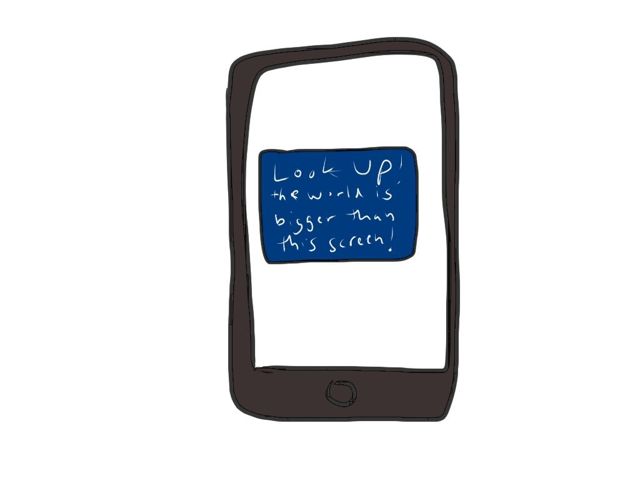
  • look up! a cartoon.

    –––––––

    Apr 17
  • Online social networks as a dominant medium for ideas, relationships and communication is not a fad. Online communities not based on something substantial in the offline world are a fad or rather were the easiest types of networks to get up and running. Today’s leading social networks from Facebook to linkedin to eharmony and other niche communities thrive because they are based on meaningful relationships/structures in the offline world – workplace, school, dating, religion, community activity, teams The social networks in decline or already gone have been based on virtual or entertainment only connections between members – music group fans, gossip, breaking news, Internet memes, pro sports, etc.

    The online networks based on offline structures benefit greatly from built in relationships, hierarchies, and connected behaviors. It is much easier to invent functions and services based on well established behaviors and objectives. Additionally the offline structures mentioned above are more important to people in their daily lives than purely virtual communities. This deeper importance leads to better engagement and commitment to the online counterpart of that institution. E.g. Few users maintain a sloppy or misleading linked in or Facebook profile (this isn’t constrained to any age group either). As the online and offline components become more intertwined activity in either becomes reinforcing.

    The downside of building an online community based on something offline is that can take considerable resources to get it right and achieve critical mass, the user must do more to get the value – fill out a profile, be real, have substance in interactions, be interesting offline etc.

    There are other reasons virtual only communities suffer… Because the interactions have few offline consequences the interactions quickly grow out of sync with offline norms and values. The more out of sync they get the harder it is for their to be lasting connectedness between larger and larger groups of members. The network fractures and often gets too abnormal for mass consumption.

    I am definitely making the claim that celebrity worship, loving the same bands, seeing the same movies, disliking the same athletes, being simply in a similar career are not strong enough connections to build a social network around. Shared offline experiences is the basis of long lasting online communities. Last I checked humans still lived, ate, made babies, earned money and died in the real world. And the things most essential to doing those activities are what were all going to post, blog, take pictures, comment and like.

    As an aside to those working in the internet biz…. Not all unique users are created equal. Very quickly this industry will have a metric system based on unique people with real names interacting in your system. Of course publishers, networks, media companies will always attempt to shroud those numbers in mystery, but it’s getting harder and harder to hide how many real people use a system. Once the industry makes this shift the offline connectedness becomes more essential.

    Building online communities: offline connectedness essential

    –––––––

    Apr 17
  • Look, I’m a parent.  As much as I hate to admit it, kids do greatly influence spending in the household.

    My 6 and 4 year old don’t just like the iPad – they get it. As Reese, 4 years old says, “It’s the iPad, you watch TV and do stuff on it.”   And then she goes off and well, watches TV and pokes around on it.  It fits in her lap, is loud enough without headphones and doesn’t turn off or freeze if she happens to get curious.

    Reese Chillin' with the iPad
    Reese Chillin' with the iPad

    Mass consumer adoption of technology requires everyone in the family to get use out of it.  Say what you want about whether the iPad works for you as a work computer, it definitely works for a TV that does stuff for most families and it doesn’t cost much more than a flat screen that does nothing.   Forget how this thing screws up computer companies… what about the TV market…. what about the kids stuff market….

    Kids love it = mass adoption. QED.

    iPad Will Sell Because Ages Under 10 Get It. Period.

    –––––––

    Apr 8
  • Nice write up from my friend, Florent, about Foursquare API being used to create location heatmaps. This is precisely the location behavior data I was talking about in my post the other day.

    You see in his heatmap I know where he works, where he hangs out and where he lives… and when he goes between all that.   What’s great is you don’t actually need a lot of check ins and you don’t need someone to use one app or another.  There’s enough location data flowing around through facebook, twitter, myspace, flickr, foursquare, yelp, email accounts, etc. etc. for ad networks and ad providers like Apple, Google, Microsoft to build the location mapping for you.

    Once you have a users location map it’s pretty obvious how you want to target ads to them by day part, ad type, etc.

    This isn’t all that surprising, is it?   The surprising part to me is that we didn’t really need every user in the world to be tracked by some big brother entity, some central GPS tracker.   The way of the Internet (loosely coupled/linked services) provides all the information, perhaps more, than we need to build better targeting algos.

    I suspect more and more user will opt in to ambient location pinging if it means they get more relevant, less distracting content and advertising.

    The key in making a successful ad network on all this data/targeting is building up the marketplace such that bidding happens based on Latitude/Long and day parting, not keywords.  Most of the infrastructure for bidding systems now is largely keyword based.

    Oh, and… location based bidding systems won’t be strictly about pushing ads to your mobile device.  It will include digital out of home displays like billboards, signage, etc. etc.   (My friend Lane was trying to get a bidding system in place for that a couple of years ago!)

    Local Advertising Algo Follow Up

    –––––––

    Apr 7
  • Weplay.com - Something to Believe InWeplay.com is a great experience and it’s a great start-up to work at.   At its core Weplay is a clean-well lit platform for parents, kids and coaches helping them do all the things you want and need to do in youth sports and family life. On a somewhat biased note (I’ve got young-ins!), it’s a social platform that younger people can cut their teeth on.

    Weplay is exceptional to me because I work on it, I use it and I love it.

    Weplay has a responsive and responsible community who help build and define it.

    These are remarkable characteristics that, in my experience, are rare for a “new media” effort.   Certainly it doesn’t yet have 25 million people visit the website or use the API or use the mobile app yet (closing in on a million Unique Users and 8 million pageviews ain’t bad, though!).   It does have the core of something special and it has a team working on it that understands how careful and dedicated a company needs to be making something users actually care about.

    There are no shortcuts!

    When we develop product ideas the decision making process is very simple and very challenging.   Is whatever we’re about to build something we’d use as parents, coaches, and participants in sports?   Is what we just released and are thinking about improving actually being used?

    And by use, we don’t mean can we pump some internet traffic through it, can we push ad impressions against it.   Is Weplay actually being used to manage real teams, deliver real snack schedules, help kids learn real skills, help kids strengthen real world friends, and so on?   Is it something that is increasing the engagement in learning, practice, and competition?  I’ve seen the evidence that it is.

    Another tough but important question about long term success – if Weplay went away would a user have to change their behavior dramatically?   Not very many services, technologies, media experiences can answer that in the affirmative.   I believe Weplay is a “must use” for a good deal of our 300,000+ members.   Frankly, I’d rather have 50,000 users who must use a service, than 3 million passer-bys.   Perhaps that’s not popular to say in new media, but over the long term of a business it is vital to become a must use for a core set of users.  There are business graveyards full of media/software experiences formerly of 50 million+ “users” because they never became vital to some users’ regular daily behavior.

    Great technology is defined by Usage, not Code.

    Weplay has very slick code.  I could show you lines and lines of clever ways of delivering the experience.  But that doesn’t matter.  What makes the Weplay technology platform special is that a huge percentage of the code is actually currently vital to the experience is repeatedly put to use by the user base.   I’ve worked on code bases that maybe less than 30% is still actively invoked.  In fact, I’d say that’s very common in the media world.  Of course, if the codebase were small and very simple this might not seem like such a big deal to be so tight.  Weplay is not a simple platform.  It contains calendaring, alerting, social graph integration, profiles, private messaging, online awareness, media transcoding, media uploads, sharing, full blogging platform, points system, friending, groups, “fan pages”, an “answer” system, walls, a full/more traditional CMS, tracking/analytics, and so much more.  It’s high availability, cloud based, and has multiple upgrade deploys a week.   And it’s only team of 6 people building and maintaining that code base!

    You can’t fake fun!

    Can't Fake These Smiles!

    Believably faking a smile and a laugh is one the hardest things to do.  Spend time on Weplay and you’ll run across thousands and thousands of smiling and laughing kids, teams, coaches, grand parents.   Spend time at the Weplay offices in NYC and you’ll see the team smiling.   The Weplay team can’t help it… other people smiling makes you smile… ya know, that evolution, fixed action pattern thing is tough to shake!…   I’ve never worked on a platform that produced and shared as many smiles.   Youth sports is FUN.  A platform about youth sports is fun.   Weplay is a fun experience and you can’t fake that with fancy designs, clever marketing, or great PR.   Don’t take my word for it.  Join the community and you’ll see what I mean.   It’s not “fun” like playing modern warfare 2 on XBOX.  It’s fun like going to a saturday afternoon baseball game with sun shining down and kids running around doing their thing.  You can’t fake that.

    Is this blog just spin for something you’re working on, Russ?

    If I didn’t think the experience backed it up, then yeah.  But I challenge you to sign up, log in and experience Weplay.   For those that personally know me, you know when I’m just schilling for a product (probably can’t fake real enthusiasm for a product either!). It’s usually the products and companies I don’t write about, post something on facebook, etc that I don’t believe in whether I’m working on them or not.

    One of my personal goals for 2010 is to build, design, consult, contemplate, talk about products I believe in and actually would or do use.  Period.

    (Just for the record I love windows 7, the iPad, Wolfram Alpha, Mathematica, XBOX live, and several hundred other very cool things…….)

    Weplay.com – Working on Things You Personally Use and Believe In

    –––––––

    Apr 6
  • I’ve avoided posting much about Tiger Woods.  It’s just too easy.  However, today ESPN had a piece from Rick Reilly that is just too crazy to not poke at a bit.  The piece isn’t badly written or “wrong”… it’s  crazy in its assumptions and bombastic its claims and it might just be an accurate reflection of golf’s, ESPNs, sports’, and Tiger’s audience values.

    Here’s the zinger of it all:

    We don’t usually build statues of nice, helpful, well-balanced men.

    This sentiment seems to call out a justification of Tiger Woods’ behavior – in the pursuit of greatness you should do anything… in fact, greatness is a result of Tiger Woods’ “self-obsession, a limitless appetite for domination, me-first-ism to the extreme.”

    That’s the same logic used by people to suggest that great comedy comes only from troubled souls, good writing from lonely people, successful business from obsessed workaholics, etc. etc.  These are catchy statements that help people wrap up complex situations but they really aren’t justified.  For one, you can’t at all determine causation from correlation in any of these examples.   It might be that great sports stars learn those behaviors while playing their sport, or they self select into the sport, etc. etc.

    He vows no more “entitlement.” But Tiger Woods always played as though the trophy had his name engraved on it when he showed up Tuesday.

    He vows to “tone down my negative outbursts and … my positive outbursts.” But can he win without the fist pump? Can he win without passion?

    So… if Tiger Woods doesn’t win the Masters will Reilly and the audience blame rehab? Tiger’s wife? Buddha?  The Weaker Fist Pump?   There’s a subtle suggestion in this article that suggests that Tiger sorting out his personal life might not be worth possibly losing some golfing success.

    I suspect there’s a good chunk of the audience that share these value statements – winning golfing tournaments might be more important than the other stuff……….

    If Tiger Woods wins his last 4 months of behavior will fade quickly from the public discussion.   (Remember what Kobe Bryant did a couple of years ago? No, not that winning MVP and championships….)

    I’m not saying it’s good or bad values that we’re seeing on display or I share any of these.. just calling out that there are value systems at work here and they often aren’t very politically correct.

    Tiger Woods Masters Experience – About to Showcase Audience Values In A Major Way

    –––––––

    Apr 6
  • The iPad, like the iPod, iPhone, and iMac isn’t a revolution in computer science, design interface, consumer packaging nor ui. It’s a revolution of the economics of those things. Now that there’s a device on the market now at 500 bucks and an unlimited data plan for 30 bucks a month it’s almost assured that the iPad type of computing and media platform will be popularized and maybe not even by apple. The hype of the technology will surely drown out the economic story for some time but in the long run the implications of the price of this technology will be the big story.

    Sure we have sub 500 dollar computers and media devices. they have never been this functional or this easy. Apple has just shown what is possible so now the other competitors will have to follow suit. It really doesn’t matter in the grand scheme if it’s apple or htc or google or microsoft or Sony who wins the bragging wars each quarter – the cat is out of the bag – cost effective, easy to use, and fun computing for everyone is possible in a mass producible construction.

    There are some interesting side effects coming out of this. If a business can’t make huge profits from the hardware or the connection or the applications where will the profit come from? (I’m not saying companies won’t mark good profits I just don’t think it will be sustainable – especially for companies used to big margins.)

    Obviously the sales of content matters. Books, movies, games, music and so on. This computing interface makes it far more easy to buy content and get a sense that it was worth buying. If the primary access channel is through a browser I think people aren’t inclined to pay – we all are too used to just freely browsing. On a tablet the browser isn’t the primary content access channel.

    The challenge for content providers is that quality of the content has to be great. This new interface requires great interactivity and hifi experiences. Cutting corners will be very obvious to users. There’s also not really some easy search engine to trick into sending users to a sub par experience. That only works when the primary channel is the browser.

    If advertising is going to work well on this platform boy does there have to be a content and interaction shift in the industry. Banners and search ads will just kill an experience on this device. Perhaps more old school magazine style ads will work because once your in an app you can’t really do some end around or get distracted. Users might be willing to consume beautiful hifi ads. Perhaps the bigger problem is that sending people to a browser to take action on an ad will be quite weird.

    Clicks can’t be the billable action anymore. Clicks aren’t the same on a tablet! (in fact, most Internet ads won’t work on the iPad. Literally. Flash and click based ads won’t function)

    Perhaps the apps approach to making money will work. To date the numbers don’t add up. Unless users are willing to pay more for apps than they do on the iPhone only a handful of shops will be able to handle the economics of low margin, mass software. So for the iPad apps seem to be higher priced. More users coming in may change that though.

    In a somewhat different vein…. Social computers will be a good source of cold and flu transmission. If we’re really all going to be leaving these lying about and passing them between each other, the germs will spread. Doesn’t bother me, but some people might consider that.

    Will users still need to learn a mouse in the future?

    Should we create new programming interfaces that are easier to manipulate with a touch screen. Labview products come to mind?

    What of bedroom manners? The iPhone and blackberries are at least small…

    And, of course, the porn industry. The iPhone wasn’t really viable as a platform. This touch based experience with big screens… Use your imagination and I’m sure you can think up some use cases…

    I do think this way of interacting with computers is here to stay. It’s probably a good idea to think through how it changes approaches to making money and how we interact with each other. I’d rather shape our interactions than be pushed around unknowingly….

    Happy Monday!

    The Implications of Popularization of new forms and functions

    –––––––

    Apr 4
Previous Page Next Page

Blog at WordPress.com.


Loading Comments...
 

    • Subscribe Subscribed
      • Social Mode
      • Join 99 other subscribers
      • Already have a WordPress.com account? Log in now.
      • Social Mode
      • Subscribe Subscribed
      • Sign up
      • Log in
      • Report this content
      • View site in Reader
      • Manage subscriptions
      • Collapse this bar